

A coffee machine, but for supplements
An Arduino powered hardware device connected to a custom iOS app to output the right amounts of powdered supplements.
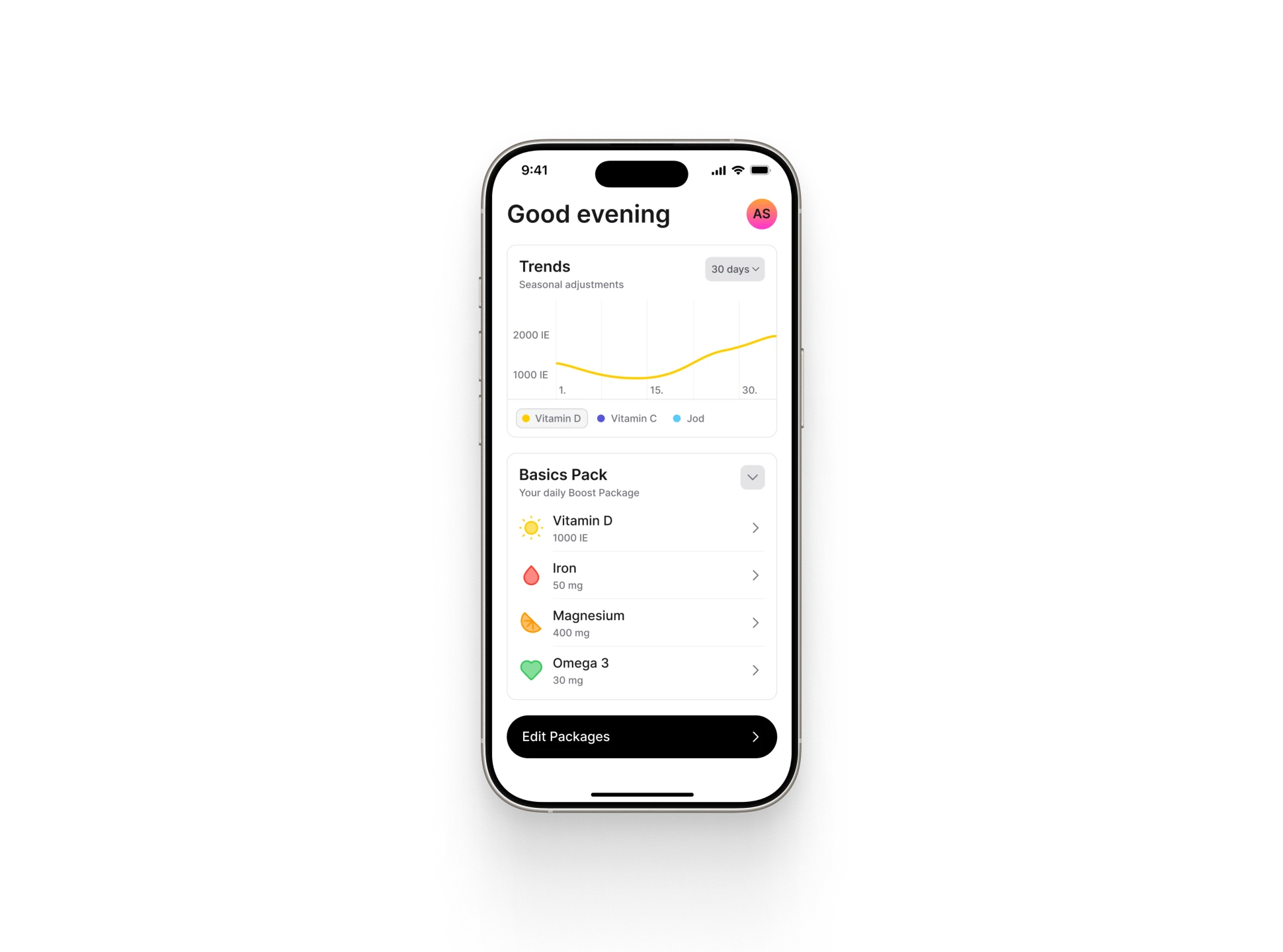
Despite widespread supplement use, most people don't know how much they should take or which products are best for their specific needs. The market is saturated with options, creating confusion rather than clarity for consumers.
Branding & Identity
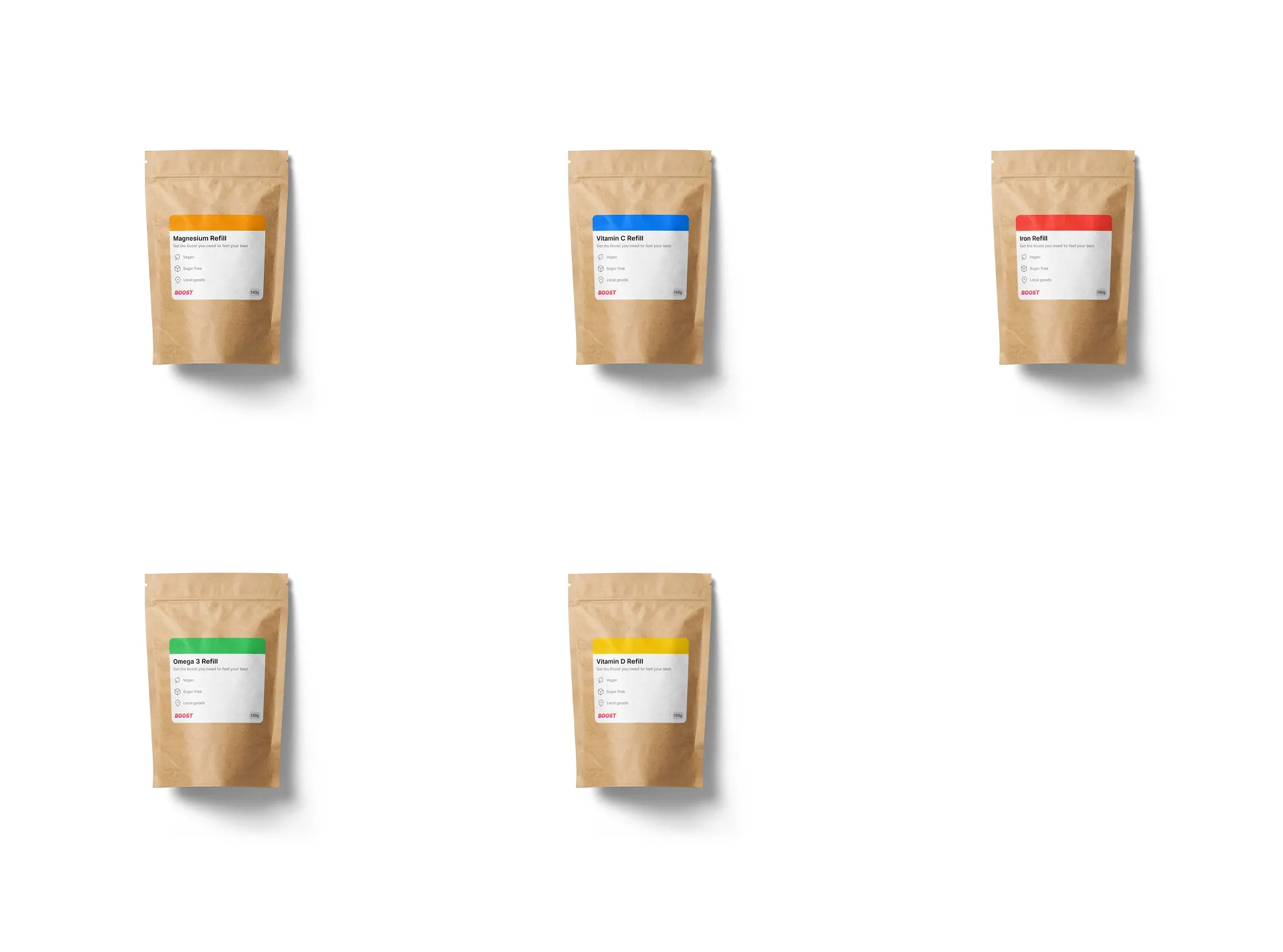
We developed a cohesive brand identity that reflects the precision and personalization at the core of Boost.

Hardware Device
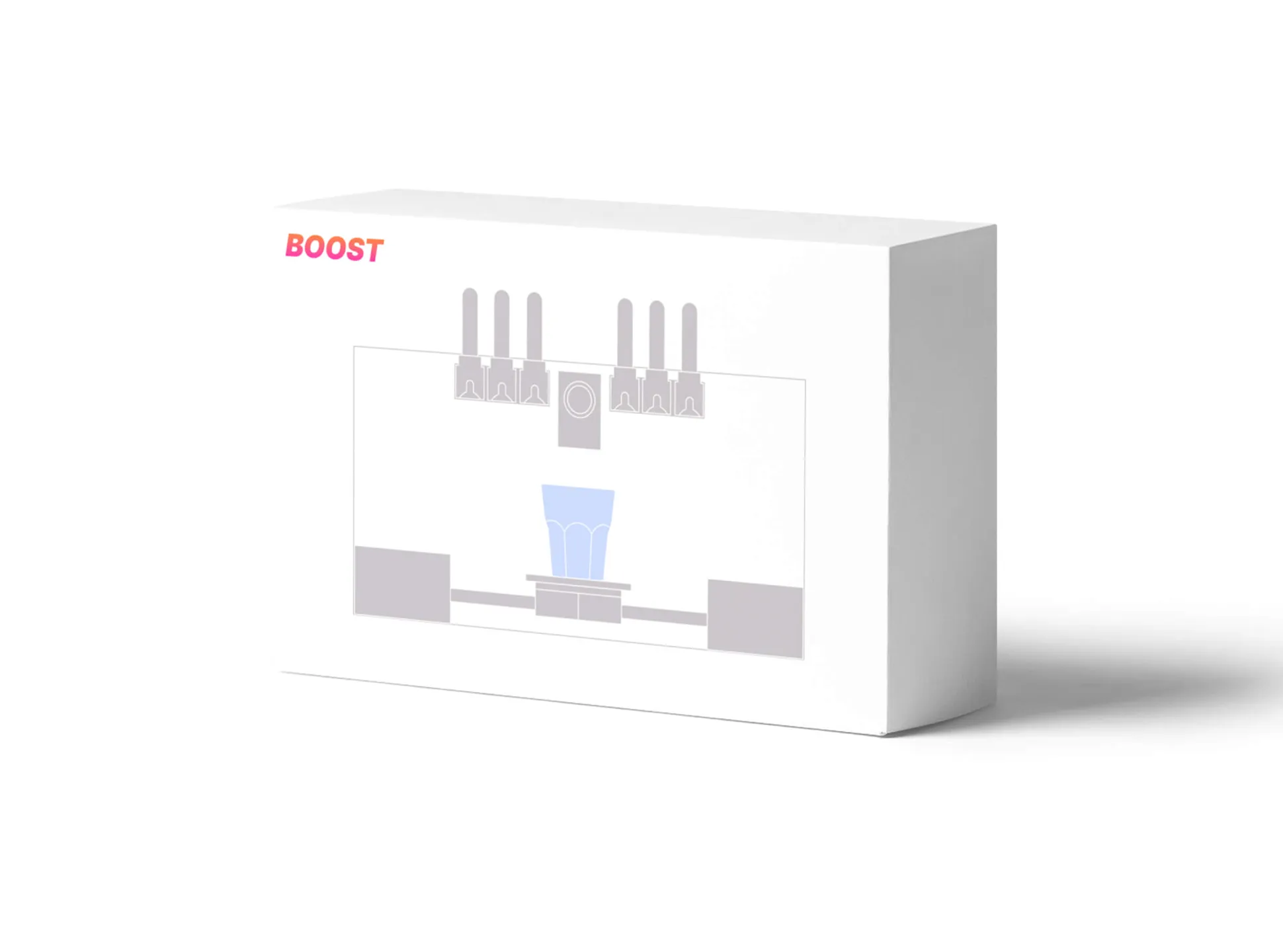
We developed a hardware prototype to test functionality and user experience. After testing various motors, we selected the Nema 17 stepper motor for optimal performance. We programmed an ESP32 using Arduino IDE and created a NodeJS Express server to handle data transmission between the hardware and a quickly developed frontend.
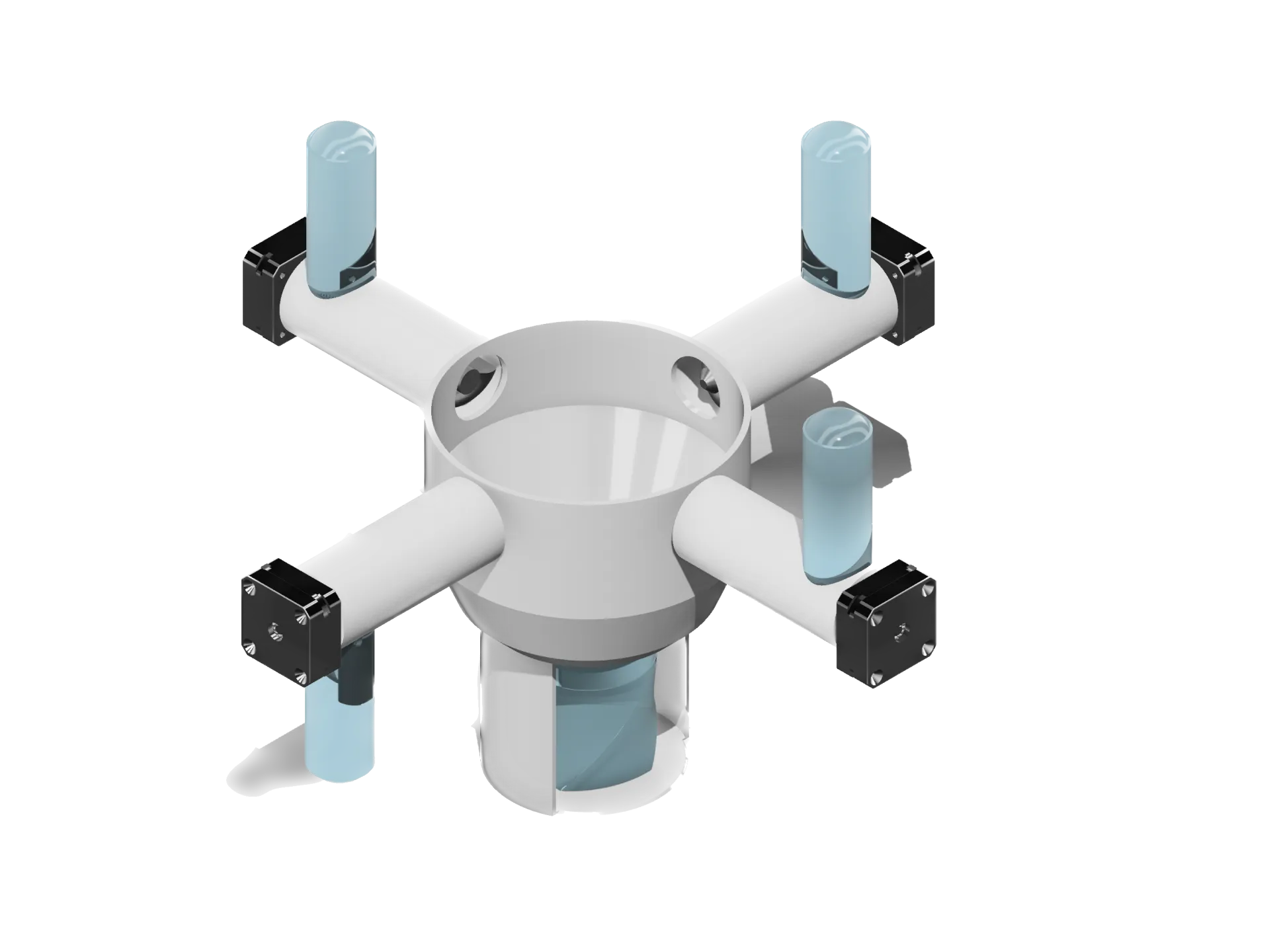
Here's one of the 3D models we created during the prototyping process:
The final hardware prototype incorporated seven stepper motors, various sensors, a circular display, and two ESP32 controllers. We designed the system to transmit and receive data via HTTP requests, prioritizing reliability and creating a realistic user experience.
Mobile App
We designed the application to be fully functional even without hardware connection, allowing for independent testing. Starting with a comprehensive Figma prototype, we built the application using Ionic React, with a NodeJS Express backend and Prisma for database modeling.
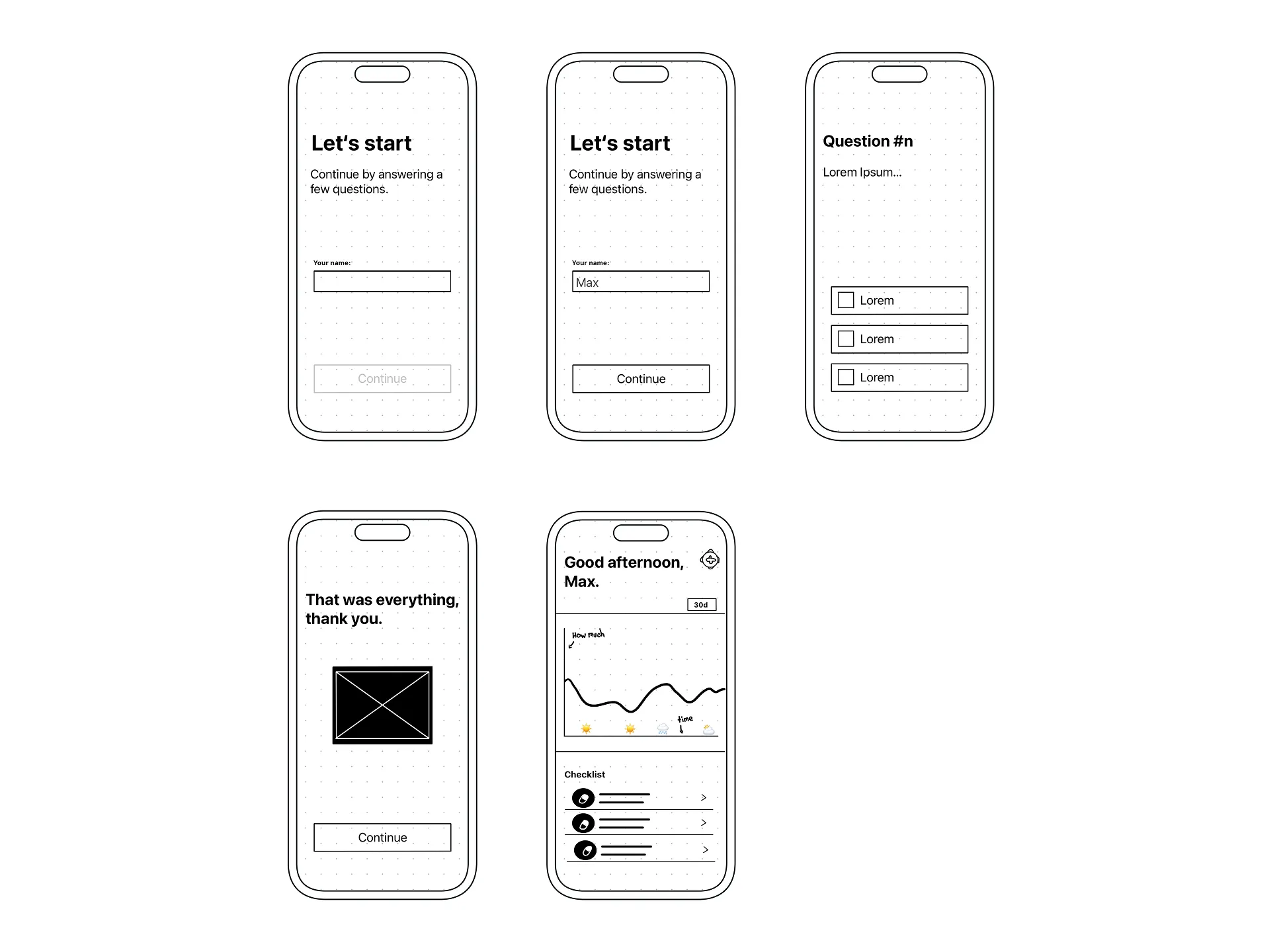
We integrated Apple HealthKit and OpenWeather API to gather user data for calculating personalized vitamin recommendations.
Reception
Our prototype received enthusiastic feedback when showcased at the University Exhibition, with many attendees expressing interest in using both the app and device. The project's potential was further validated when we were invited to present at a Startup Accelerator.